In [8]:
    from pydata.style import *
    %load_ext literacy.template
Perhaps one of the earliest multiscale models, Ray and Charles describe the complex relationships across length scales. Their landmark video Powers of Ten illustrated the 1970s state of the art in the design and engineering of optical systems.
In [2]:
df.iloc[[0]]
Out[2]:
In [2]:
## _Design_ & [Systems]( "1979")
In [3]:
Astropy = Import('.Astropy Units')
In [4]:
## `Astropy` contains {{len(Astropy.s)}} units

    IFrame(Astropy.path)
Out[4]:
In [4]:
> There is an interesting region, i.e. find meters
In [4]:
* https://en.wikipedia.org/wiki/Timeline_of_computing_hardware_before_1950
* https://en.wikipedia.org/wiki/History_of_computing_hardware_(1960s%E2%80%93present)


In [4]:
https://en.m.wikipedia.org/wiki/Transatlantic_communications_cable#Private_cable_routes
In [4]:
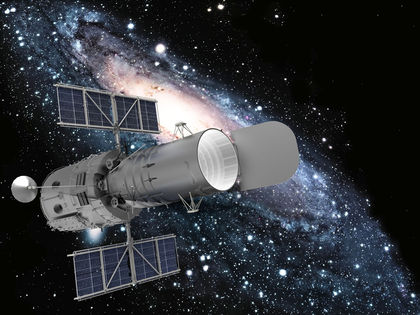
http://www.scienceclarified.com/scitech/Telescopes/Hubble.html

In [4]:
## _Design_ & [Materials]()

* Metals, Polymers, Ceramics
* Function, Structural
* Composite
In [4]:


In [5]:
    %%html
    <div class="github-card" data-user="chrislgarry" data-repo="Apollo-11"></div>
    <script src="https://cdn.jsdelivr.net/gh/lepture/github-cards@1.0.2/jsdelivr/widget.js"></script>
In [5]:
## Hubble Glass
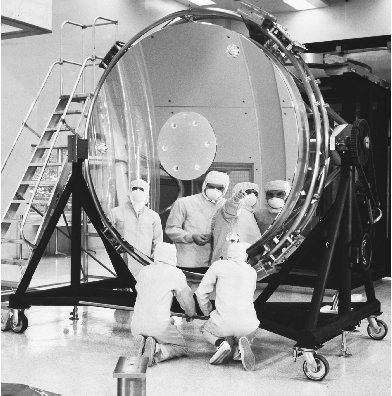
Hubble Glass

In [5]:
## [Gorilla Glass](http://www.designlife-cycle.com/corning-gorilla-glass/)
In [5]:
### [Degradation of railway rails from a materials point of view](http://publications.lib.chalmers.se/records/fulltext/173441/173441.pdf#page=15)
In [5]:
## [Advanced High Strength Steels](https://lightmat.org/capabilities/los-alamos-national-laboratory/advanced-high-strength-steel-development)
[](https://lightmat.org/capabilities/los-alamos-national-laboratory/advanced-high-strength-steel-development)

In [5]:
[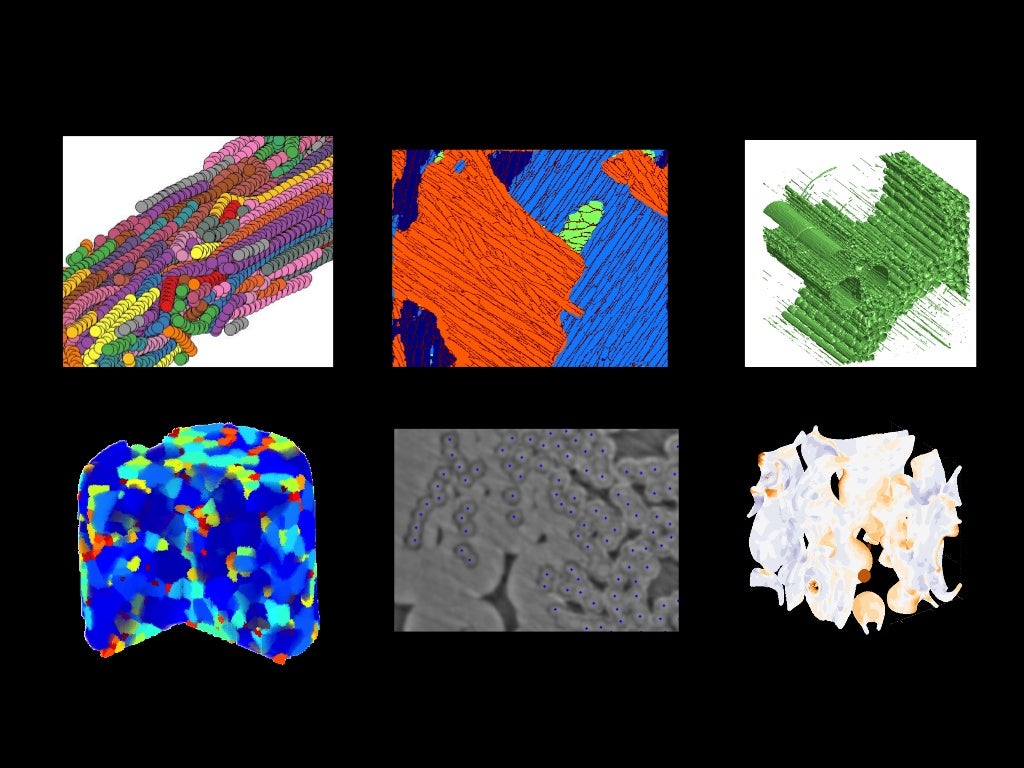](https://www.slideshare.net/tonyfast1/flamel-materials-informatics-course-roundup)

In [5]:
### [High-Throughput Image Analysis of Fibrillar Materials: A Case Study on Polymer Nanofiber Packing, Alignment, and Defects in Organic Field Effect Transistors](http://pubs.acs.org/doi/abs/10.1021/acsami.7b10510)
In [5]:
https://zoomimgs.github.io
In [5]:
## _Design_ & [Community]()

> Communities, and their varied forms and structures, are essential to considering other functional constraints.
In [5]:
### Philanthropic
* [Human Cell Atlas](https://www.humancellatlas.org/) ([Chan Zuckerberg](https://chanzuckerberg.com/))
In [5]:
### Government
* National Manufacturing Initiatives
* Materials By Design
* [CERN](https://home.cern)
In [5]:
### Public

# conda  forge

 forge
forgeIn [5]:
https://www.ncbi.nlm.nih.gov/pmc/articles/PMC3878597/
https://en.m.wikipedia.org/wiki/Reproducibility#Reproducible_research
https://en.m.wikipedia.org/wiki/The_Structure_of_Scientific_Revolutions
https://en.m.wikipedia.org/wiki/LIGO_Scientific_Collaboration#History
https://www.fraunhofer.de/en.html

In [5]:
> ## [The First Web Page](http://info.cern.ch/hypertext/WWW/TheProject.html "1990")
In [5]:
## [Django](https://en.m.wikipedia.org/wiki/Django_%28web_framework%29)
In [5]:
## [Particles at NYT](http://nytlabs.com/blog/2015/10/20/particles/)
In [5]:
## [d3: Data-Driven documents](https://d3js.org)
In [5]:
https://getbootstrap.com/
In [5]:
https://reactjs.org/

In [5]:
https://www.ushahidi.com/
In [5]:
https://native-land.ca/


inconvenient truth

h
In [5]:
http://opengeoscience.github.io/geojs/examples/hurricanes/
In [5]:
## _Design_ & [Design]()


In [6]:
## [`ωorldΒank=__import__('particles.World Bank')`](../World Bank.ipynb)

In [6]:
http://www.redharebrewing.com/red-hare-launches-worlds-first-evercan/
In [6]:
## [Design of Experiments](https://en.m.wikipedia.org/wiki/Design_of_experiments#Fisher.27s_principles 1935)
In [7]:
    import sklearn.datasets
    print(sklearn.datasets.load_iris().DESCR)